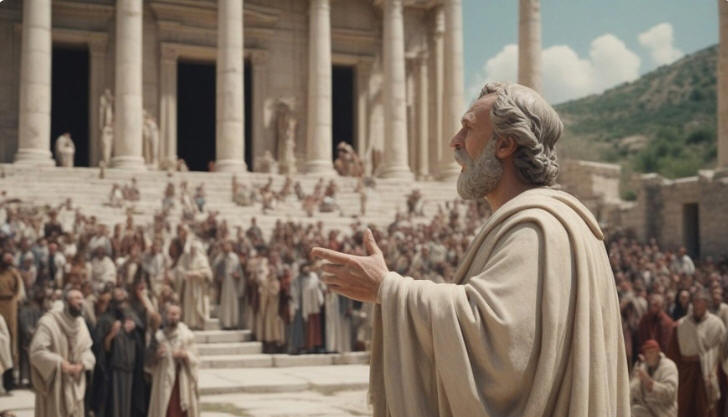
|
They who had looted, burned, and murdered Christians have now come
forward demanding justice for themselves - of course by means of
distortions and lies! They claim that, as... evident in the Acts of the
Apostles in the Holy Bible, Christians in Ephesus were looting and burning books at Ephesus. Let us also expose this lie here;
examine how events actually unfolded, and see what the Acts of the
Apostles truly record on this matter.
Unfortunately, even today there those who attempt to accuse Christianity
by resorting to lies and distortions. Certain paganists still
accuse Christians of destroying books of antiquity in Ephesus, by
literally butchering the relevant verses in the Acts of the Apostles.
Let us therefore take a careful look at what is ACTUALLY being narrated
therein:
ACTS OF THE APOSTLES - CHAPTER19
| Original
Greek Text |
English
rendition |
| 1
Εγένετο δε εν τω τον Απολλώ είναι εν Κορίνθω Παύλον
διελθόντα τα ανωτερικά μέρη ελθείν εις Έφεσον· και ευρών
μαθητάς τινας |
1And it happened
that, when Apollos was in Corinth, Paul - having passed
through the higher up places - came
to Ephesus, and, having found certain disciples there,
he said to them: |
| 2 είπε
προς αυτούς· ει Πνεύμα Άγιον ελάβετε πιστεύσαντες; οι δε
είπον προς αυτόν· αλλ’ ουδέ
ει Πνεύμα Άγιόν εστιν ηκούσαμεν. |
2 “Did
you receive the Holy Spirit when you believed?”
And they said to him: “But
we have not even heard that there is a Holy Spirit!” |
| 3 είπέ
τε προς αυτούς· εις τι ουν βαπτίσθητε; οι δε είπον· εις
το Ιωάννου βάπτισμα. |
3 And he said to
them: “Then
In what were you baptised?”
And they said: “In John’s
baptism”: |
| 4 είπε
δε Παύλος· Ιωάννης μεν εβάπτισε βάπτισμα μετανοίας, τω
λαω λέγων εις τον ερχόμενον μετ’ αυτόν ίνα
πιστεύσωσι, τούτ’ έστιν εις τον Ιησούν Χριστόν. |
4
and Paul said: “John
baptised a baptism of repentance, telling the people to
believe in the One who was to come
after him
(John),
that is, in Jesus Christ. |
| 5
ακούσαντες δε εβαπτίσθησαν εις το όνομα του Κυρίου
Ιησού. |
5
And when they heard that, they were baptised in
the name of Jesus Christ. |
| 6
και επιθέντος αυτοίς του Παύλου τας χείρας ήλθε το
Πνεύμα το Άγιον επ’ αυτούς, ελάλουν τε γλώσσαις
και προεφήτευον. |
6 And upon Paul
placing his hands on them,
the Holy Spirit came upon them; and they spoke in
tongues and prophesied. |
| 7
ήσαν δε οι πάντες άνδρες ωσεί δεκαδύο. |
7 And all of them
were men, around twelve. |
| 8
Εισελθών δε εις την συναγωγήν επαρρησιάζετο
επί μήνας 3 διαλεγόμενος και πείθων τα περί της
βασιλείας του Θεού. |
8 And on entering
the synagogue, he spoke boldly there for three months,
discussing and convincing them on matters regarding
God’s Realm. |
| 9
ως δε τινες εσκληρύνοντο και ηπείθουν κακολογούντες την
οδόν ενώπιον του πλήθους, αποστάς απ’ αυτών αφώρισε τους
μαθητάς, καθ’ ημέραν διαλεγόμενος εν τη σχολή Τυράννου
τινός. |
9 But when some
of them became obstinate and were not convinced,
maligning the Way(*)
of the Lord in public, he distanced himself from them,
by isolating the
disciples and having daily discussions in the school of
one called Tyrannos. |
| 10
τούτο δε εγένετο επί έτη δύο, ώστεπάντας τους
κατοικούντας την Ασίαν ακούσαι τολόγο του Κυρίου Ιησού,
Ιουδαίους kai Έλληνας. |
10 And this
continued for two years, so that all those who lived in
Asia (Minor)
had heard the word of the Lord Jesus - Jews and
Hellenes. |
| 11
Δυνάμεις τε ου τας τυχούσας εποίει ο Θεός δια των
χειρών Παύλου, |
11 Also, God
performed not just any miracles, through the hands of
Paul, |
| 12
ώστε και επί ασθενούντας επιφέρεσθαι από του χρωτός
αυτού σουδάρια ή σιμικίνθια και απαλλάσσεσθαι απ' αυτών
τας νόσους, τα τε πνεύματα τα πονηρά εξέρχεσθαι απ’αυτώn |
12. but such
that, even by
placing on the sick any handkerchiefs or aprons that had
touched his body, they were rid of illnesses, and the
evil spirits would depart from inside them. |
| 13
Επεχείρησαν δε τινες από των περιερχομένων Ιουδαίων
εξορκιστών ονομάζειν επί τους έχοντας τα πνεύματα τα
πονηρά το όνομα του Κυρίου Ιησού λέγοντες· ορκίζομεν
υμάς τον Ιησούν ον ο Παύλος κηρύσσει. |
13
Certain wandering exorcist Jews had tried to use
the name of the Lord Jesus on those possessed by evil
spirits, saying: “we command
you in the name of Jesus who Paul preaches.” |
| 14
ήσαν δε τινες υιοί Σκευά Ιουδαίου αρχιερέως
επτά οι τούτο ποιούντες. 15 αποκριθέν δε το
πνεύμα το πονηρόν είπε· τον Ιησούν γινώσκω
και τον Παύλον επίσταμαι· υμείς δε τίνες εστέ;
16 και εφαλλόμενος επ’ αυτούς ο άνθρωπος,
εν ω ην το πνεύμα το πονηρόν, και κατακυριεύσας αυτών
ίσχυσε κατ’ αυτών, ώστε γυμνούς και τετραυματισμένους
εκφυγείν εκ του οίκου
εκείνου. 17 τούτο δε εγένετο γνωστόν πάσιν Ιουδαίοις τε
και Έλλησι τοις κατοικούσι την Έφεσον,
και επέπεσε φόβος επί πάντας αυτούς, και
εμεγαλύνετο το όνομα του Κυρίου Ιησού· |
14 There were
certain sons of Sceva the Jewish head priest who did
that - seven of them.
15 And the evil spirit
replied to them, saying: “I
know Jesus and I know Paul, but I wonder, who are all of
you?” 16
And the man (inside whom the evil spirit had been)
jumped on them and overpowered them, finally beating
them, so that they fled that house, naked and wounded.
17
And this became known to all the Jews and the Hellenes
who lived in Ephesus· and fear fell upon them all, and
the name of the Lord was greatly magnified. |
|
18 πολλοί τε των
πεπιστευκότων ήρχοντο εξομολογούμενοι και αναγγέλλοντες
τας πράξεις αυτών. 19 ικανοί δε των τα περίεργα
πραξάντων συνενέγκαντες τας βίβλους κατέκαιον ενώπιον
πάντων· και συνεψήφισαν τας τιμάς αυτών
και ε ύρον αργυρίου μυριάδας πέντε. |
18
And many of those who believed came confessing
and publicly announcing their acts.
19
In fact, a good number of those who did
strange things
(=sorcery
etc)
were
bringing their own
books and burning them in front of everyone:
and they evaluated them and found them equal to 50.000
silver coins. |
| 20
Ούτω κατά κράτος ο λόγος του Κυρίου ηύξανε και ίσχυεν. |
20 It was thus
that the word of the Lord increased and prevailed
everywhere. |
| 21
Ως δε επληρώθη ταύτα, έθετο ο Παύλος εν τω πνεύματι
διελθών την Μακεδονίαν και Αχαϊαν πορεύεσθαι εις
Ιερουσαλήμ, ειπών ότι μετά το γενέσθαι με εκεί δει με
και Ρώμην ιδείν. |
21 As soon as
these things were fulfilled, Paul mentally decided,
after passing through Macedonia and Achaia, to go to
Jerusalem, saying that “after
going there, I must also see Rome”. |
| 22
αποστείλας δε εις την Μακεδονίαν δύο των διακονούντων
αυτώ, Τιμόθεον και Έραστον, αυτός επέσχε χρόνον εις την
Ασίαν. |
22. After sending
to Macedonia two of his assistants, Timothy and Erastus,
he remained some more time in Asia (Minor). |
|
23 Εγένετο δε κατά τον καιρόν εκείνον
τάραχος ουκ ολίγος περί της οδού. 24 Δημήτριος γαρ τις
ονόματι, αργυροκόπος, ποιών ναούς αργυρούς Αρτέμιδος
παρείχετο τοις τεχνίταις εργασίαν ουκ ολίγην· 25 ους
συναθροίσας και τους περί τα τοιαύτα
εργάτας είπεν· άνδρες, επίστασθε ότι εκ
ταύτης της εργασίας η ευπορία ημών εστι,
26 και θεωρείτε και ακούετε ότι ου μόνον
Εφέσου, αλλά σχεδόν πάσης της Ασίας ο Παύλος
ούτος πείσας μετέστησεν ικανόν όχλον,
λέγων ότι ουκ εισί θεοί οι δια χειρών
γινόμενοι. 27 ου μόνον δε τούτο κινδυνεύει ημίν το μέρος
εις απελεγμόν ελθείν, αλλά
και το της μεγάλης θεάς Αρτέμιδος ιερόν
εις ουθέν λογισθήναι, μέλλειν τε και καθαιρείσθαι την
μεγαλειότητα αυτής,
ην όλη η Ασία και η οικουμένη σέβεται. |
23
And it happened during that time,
there was no small disturbance regarding the Way.
24
Because a certain Demetrios, a silversmith, who
constructed silver shrines for
(goddess) Artemis,
provided not little work for craftsmen;
25
Summoning them and other, related workers, he said: “Men,
you know that our fortunes depend on this work,
26
And you can see and hear that not only in Ephesus,
but almost all of Asia
(Minor),
this Paul has
convinced a large number of people to convert, saying
that they are not gods, which are hand crafted.
27
Not only does this endanger the existence of our
trade, but it will also render the temple of the great
goddess Artemis not worth consideration, and it will
also diminish her majesty - which all of Asia
(Minor)
and the whole world
respects.” |
| 28
ακούσαντες δε και γενόμενοι πλήρεις θυμού έκραζον
λέγοντες· μεγάλη η Άρτεμις Εφεσίων. |
28
Having heard this and becoming fully
enraged, they all shouted, saying: “Great
is Artemis of the Ephesians!”
. |
| 29
και επλήσθη η πόλις της συγχύσεως, ωρμησάν τε ομοθυμαδόν
εις το θέατρον συναρπάσαντες Γάϊον και Αρίσταρχον
Μακεδόνας, συνεκδήμους Παύλου. |
29 And the city
was filled with turmoil; and they swarmed to the public
theatre as one, seizing both Gaius and Aristarchos - the
Macedonian travelling companions of Paul. |
| 30 του
δε Παύλου βουλομένου εισελθείν εις τον δήμον ουκ είων
αυτόν οι μαθηταί. |
30 As for Paul,
who wanted to go into the crowd, his disciples did not
let him. |
| 31
τινές δε και των Ασιαρχών, όντες αυτώ φίλοι, πέμψαντες
προς αυτόν παρεκάλουν μη δούναι εαυτόν εις το θέατρον. |
31 In fact some
Asiarchs - who were friends of his - sent someone to ask
him to not present himself at the theatre. |
| 32
άλλοι μεν ουν άλλο τι έκραζον· ην γαρ η εκκλησία
συγκεχυμένη, και οι πλείους ουκ ήδεισαν τίνος ένεκεν
συνεληλύθεισαν. |
32. Others were
shouting something else - for the church was confused -
and most of them did not even know for what reason they
had assembled. |
| 33
εκ δε του όχλου προεβίβασαν Αλέξανδρον, προβαλλόντων
αυτόν των Ιουδαίων· ο δε Αλέξανδρος κατασείσας την χείρα
ήθελεν απολογείσθαι τω δήμω. |
33 And from that
crowd they had brought forward Alexander, pointing out
that he was of the Jews; Alexander, waving his hand
about, wanted to address the public. |
| 34
επιγνόντες δε ότι Ιουδαίός εστι, φωνή εγένετο μία εκ
πάντων, ως επί ωρας δύο κραζόντων· μεγάλη η Άρτεμις
Εφεσίων. |
34 But when they
realized he was a Jew, one cry came out by all of them,
lasting two whole hours, shouting: “Great
is Artemis of the Ephesians!!” |
| 35
καταστείλας δε ο γραμματεύς τον όχλον φησίν· άνδρες
Εφέσιοι, τις γαρ εστιν άνθρωπος ος ου γινώσκει την
Εφεσίων πόλιν νεωκόρον ούσαν της μεγάλης θεάς Αρτέμιδος
και του Διοπετούς; |
35 After subduing
the crowd, the city clerk said: “Men
of Ephesus, which person doesn’t know that the city of
Ephesus is the Neokoros (guardian)
of the great goddess Artemis
and of the effigy(**)
that fell from Zeus? |
| 36
αναντιρρήτων ουν όντων τούτων δέον εστίν υμάς
κατεσταλμένους υπάρχειν και μηδέν προπετές πράσσειν. |
36 Therefore,
these things being undeniable, it is necessary that you
remain calm and not do anything thoughtless, |
|
37
ηγάγετε γαρ τους άνδρας
τούτους ούτε ιεροσύλους ούτε βλασφημούντας την θεάν
υμών. |
37
For you led these men here, who
are neither sacrilegious, nor were they blaspheming your
goddess. |
| 38
ει μεν ουν Δημήτριος και οι συν αυτώ τεχνίται έχουσι
προς τινα λόγον, αγοραίοι άγονται και ανθύπατοί εισιν,
εγκαλείτωσαν αλλήλοις. |
38 So, if
Demetrius and the craftsmen with him have a grievance
against someone, courts are available and there are
proconsuls, so let each press charges against the
others; |
| 39
ει δε τι περί ετέρων επιζητείτε, εν τη εννόμω εκκλησία
επιλυθήσεται. |
39 but if there
is something else that you seek, let it be settled in a
legal assembly. |
| 40 και
γαρ κινδυνεύομεν εγκαλείσθαι στάσεως περί της σήμερον,
μηδενός αιτίου υπάρχοντος περί ου δυνησόμεθα αποδούναι
λόγον της συστροφής ταύτης. |
40 For we are
also at risk of being charged for mutiny because of this
day, without there being any reason that we can possibly
give, to explain the revolt. |
| 41 και
ταύτα ειπών απέλυσε την εκκλησίαν. |
41 And having
said those things, he dismissed the assembly. |
|
So, we can see the following:
1) The books in question were simply privately owned books of SUPERSTITIONS,
which were burned by the owners
themselves who had converted to Christianity. There was no
destruction of a library here. Nothing of the sort is mentioned
anywhere; some critics are simply engaging in smear tactics -
nothing more. That would be akin to paganists accusing today’s
Christians - 500 years from now - of burning libraries, because they
decided to get rid of
their own books
on astrology, magic, and zodiac predictions!
2) The problem for those who opposed the apostles was... profit!
They wanted to get rid of the apostles because they stood to lose
money, and not because they loved the "goddess" more... In modern terms,
the apostles were "ruining their business." And how could that not be,
when so many people were choosing (on their own and unforced) to become
Christians?
3) The words of the Ephesus City Clerk are perfectly clear: the apostles
"are
neither sacrilegious, nor were they blaspheming your goddess.
“
So, it had nothing to do with
any persecutions or the burning of libraries – as falsely leveled
against the Christians of Ephesus by those neo-pagans.
Conclusion:
It would be adviseable to not believe whatever we see written
(especially by neo-pagans), as some of them are extremely dedicated to
undermining actual, recorded
History for their own
interests (whose goal nowadays is not to sell idols, but rather to
peddle their antiquity-obsessed magazines and books...
*******
SPECIAL NOTES
(*)
The Way - This was the original term
first used to signify the christian way of life, before the term
“Christianity” was broadly embraced.
(**)
The original, most famous object was believed by the
Ephesians to have been a wooden effigy of Artemis which was not crafted
by any human hand; it had supposedly been sent down from heaven by Zeus.
It was regarded as a divine sign of protection for their city.
(The descriptive name “Dio-petes” meant “thrown by Zeus”) Later
on, it was reproduced as a marble statue which became the main worshiped
statue of “Ephesian Artemis”.
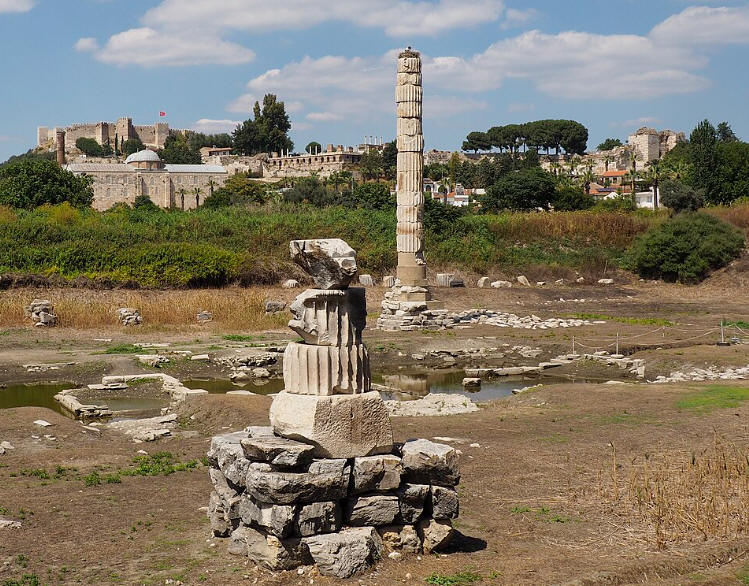
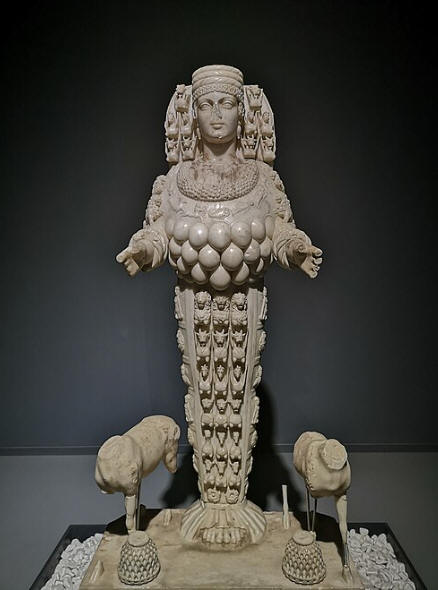
The site of the temple of Artemis in Ephesus The Artemis statue - Ephesus Museum

Translation: K.N.
|